
Santa Barbara County is known for our beaches and wealth, but there is more to the story. A county with two truths.
Every resident has the right to earn a living wage, have access to affordable childcare, plan for unexpected expenses, and have access to transportation.
The Economic Security Dashboard is a data tool collaboratively created by community invested partners and supported by the Santa Barbara Foundation. By uniting data, local leadership, and community voices, this dashboard transforms information into insight and insight into collective action to build a Santa Barbara County where every resident can thrive.

Photo Credit: Towfiqu Barbhuiya
On this page:

The Economic Security Dashboard is a project in partnership with the Santa Barbara Foundation.

Interactive Economic Security Data
Economic security in Santa Barbara County is shaped by the balance between what families earn and what it costs to live here. With high housing expenses, limited affordable child care, and rising transportation costs, many working households remain financially vulnerable even with steady employment. True economic security requires both access to quality jobs and policies that make the essentials of daily life affordable and sustainable.
Use the interactive charts below to explore economic activity, jobs, and transportation data in Santa Barbara County, CA. Use the toggles to look at past and present economic sec data and compare across metrics. All terms are defined in the Glossary. This data is most easily accessible in desktop format.

Source: ACS 5-year estimates, Living Wage Data

Jobs & Wages
Santa Barbara County is home to nearly 183,000 jobs. The expansion of employment opportunities in Santa Barbara County that meet community needs is one of the key levers of change. At this time, tourism and agriculture are two of the biggest job sectors and they are lower paying jobs, and education and/or training pathways to well-paying jobs are limited within the county.
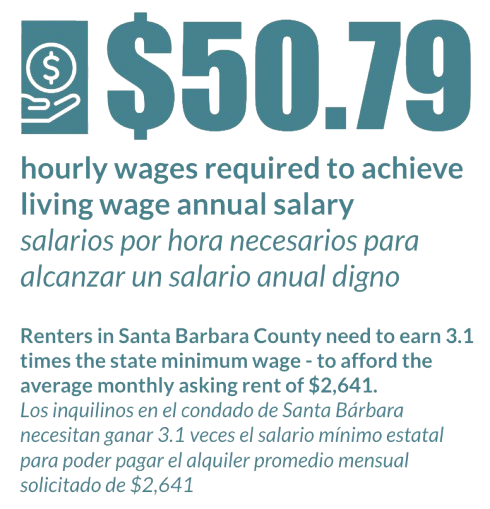
There is a mismatch between wages and living costs.
See how employment trends and wages in Santa Barbara County compare to the real cost of living. Explore data on median wages by industry, job growth, and unemployment to understand the opportunities and challenges facing our local workforce. Source: Workforce Development Board’s 2023/2024 Santa Barbara State of the Workforce Report

Cost of Living
An important aspect of the Economic Security of the region is considering the overall cost of living with core expenses (housing, childcare, transportation and food). When we look at this measure, we look at the proportion of households living below the self-sufficiency wage, even if they are above the federal poverty line.
Discover how everyday expenses—housing, transportation, food, healthcare, and child care—affect family budgets. Dashboard courtesy of: Northern Santa Barbara County United Way
Project Highlights:
Understanding Regional Travel Patterns
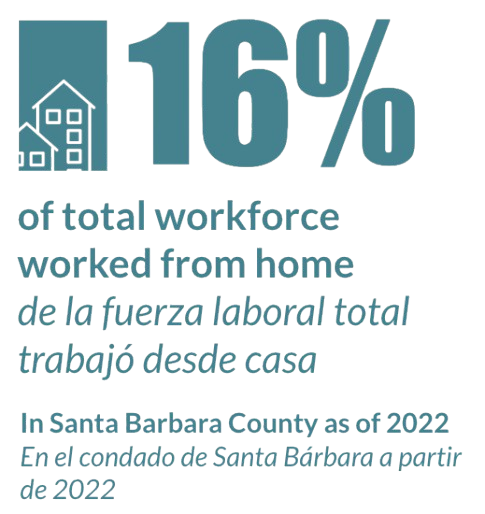
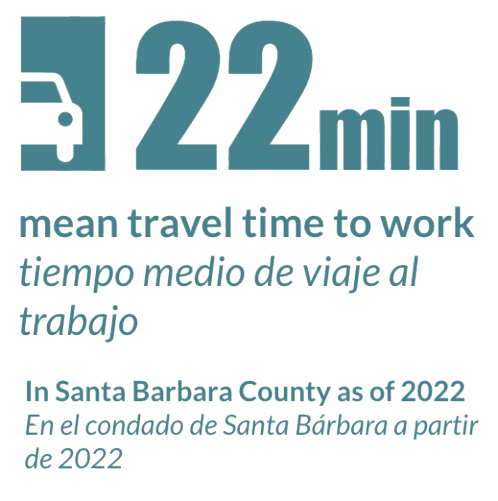
The report was created for decision-makers and the public with reliable and informative statistics and trends information related to transportation, land use, people, mobility, the economy, and social equity. This effort relies upon collaboration with the state, local partners, and the Air Pollution Control District. The general approach to this study was to determine how the region has been trending.
Entrepreneurship & Financial Empowerment for Economic Mobility
Women’s Economic Ventures (WEV) advances economic security across Santa Barbara and Ventura Counties by providing comprehensive support to local entrepreneurs through business training, one-on-one consulting services, capital access, and financial empowerment programs. Each year, WEV equips hundreds of small business owners with the tools to strengthen their financial resilience, improve budgeting and credit, build savings, and make informed financial decisions that support long-term stability.
By integrating financial empowerment with technical assistance and lending, WEV reduces structural barriers faced by under-resourced entrepreneurs and expands pathways to economic mobility. This holistic model helps business owners increase revenue, sustain jobs, manage financial shocks, and grow their enterprises, while also enhancing household financial health.
Equity in Economic Opportunity
In Santa Barbara County, improved financial literacy, quality jobs, flexible working hours, and ability to save are all components of building equity in economic opportunity. There are current disparities in wages and unemployment rates across racial, ethnic, and geographic groups within the county.
Currently, over 74,000 people in Santa Barbara County live below the poverty level. This is enough to fill the Santa Barbara Bowl 16 times. Santa Barbara County has the highest pverty rate amongst counties in the State of California.

Photo Credit: Joao Paulo M Ramos
Family Stability Indicators
Childcare is a measurable data set that emphasizes the importance of family stability indicators in Santa Barbara County. Key indicators include parental resilience, social connections, economic stability, quality family time, clear boundaries, and low residential mobility, showing a family's ability to thrive amidst challenges.
1 in 10 infants and toddlers and 7 in 10 preschool-aged children (ages 3-5) currently have access to a licensed childcare space.

Photo Credit: Vitaly Gariev
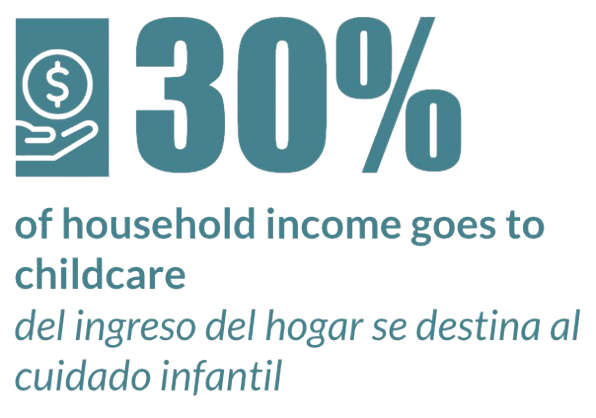
For middle-income families in Santa Barbara County as of 2024. Policy experts recommend childcare costs be no more than 7% of a family’s income.
Child Care Workforce Initiatives Expansion
The Santa Barbara Foundation (SBF) and Children’s Resource and Referral of Santa Barbara County (CRR) have been awarded a $550,000 Launchpad Catalyst Predevelopment Grant from Uplift Central Coast, securing vital funding to expand child care spaces and strengthen the child care workforce across Santa Barbara, San Luis Obispo, Ventura and Monterey Counties. This investment supports SBF’s Central Coast Childcare Workforce Expansion Project (CCWEP), a key strategic initiative aimed at addressing the region’s critical shortage of child care spaces and providers. The initiative aims to create meaningful, sustainable careers in child care, particularly for communities facing the greatest need, by providing essential training, coaching, and business support at no cost.
In A Clients Own Words
Finding housing in Santa Barbara County has been one of the hardest experiences of my life. After spending almost a year in a homeless shelter, finally getting into a housing program felt like a blessing. I’m truly grateful for the help—it gave me and my children a roof over our heads when we needed it most. But even with that support, I still feel a constant heaviness. The County’s rent prices are so high that I worry every day about what will happen when the program ends. I haven’t even been able to fully unpack or settle in, because I’m scared that I won’t be able to afford to stay. It’s a hard feeling—to finally have a home after so long, but to still live with the fear of losing it.
Coming out of a domestic violence relationship and being a single mom, the pressure to hold everything together is overwhelming. I’m working, raising my kids, and trying to build stability, but the cost of living here makes even the basics feel out of reach. The housing program helped me get out of crisis, but the reality is that surviving in the County’s harsh housing market feels like an ongoing battle.
The above story was generously shared by County of Santa Barbara, Department of Social Services.
Community Solutions
Santa Barbara County has the unique opportunity and capacity to meet our diverse community needs and expand regional investments towards our underserved communities. There are many local initiatives, a few of which are showcased here, that strengthen economic resilience in the realms of workforce development, childcare, poverty, and transportation subsidies.
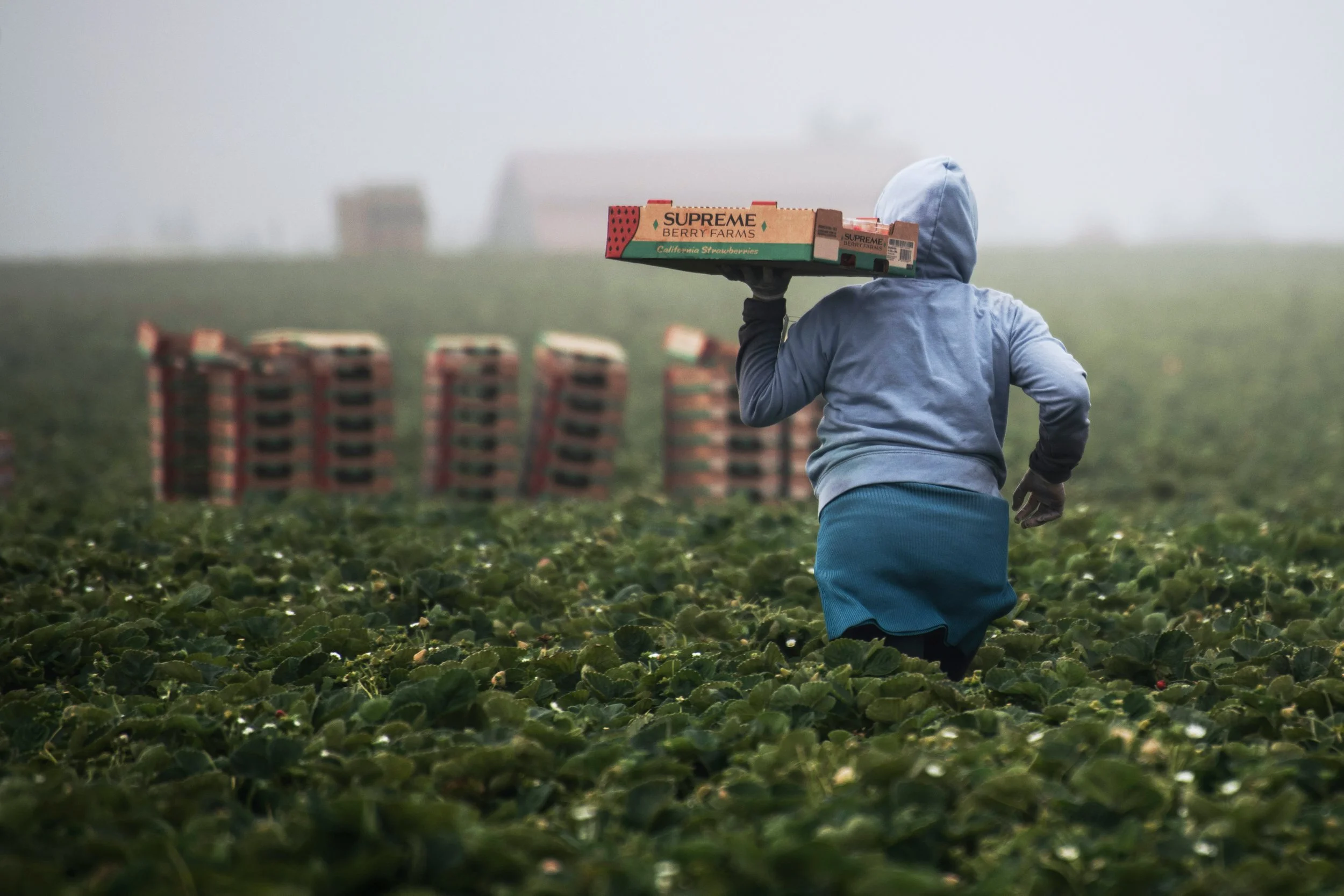
Photo Credit: Tim Mossholder
Project Highlights:
Child Care Expansion and Facilities Planning Initiative
This project has directly advanced economic security by creating thousands of new licensed child care spaces across the county in the last two years, supporting the workforce participation of parents, and strengthening the child care provider pipeline. Through grant-funded facilities assessments, land use planning, and business training for providers, CRR has not only expanded access to early care but also created pathways for small-business sustainability among family child care providers. This work demonstrates the dual economic benefit of child care: enabling parents to work while simultaneously supporting providers, most of whom are women and women of color, as small business owners contributing to the local economy.
SBCAG’sCarpool, Vanpool, and Commuter Incentives initiatives improve economic security by reducing transportation costs for workers who commute long distances, especially from North County to South County, while also cutting travel times and supporting job access. By lowering one of the biggest household expenses after housing and child care, these transportation solutions directly impact family budgets and workforce reliability.
Almost 70,000* people in Santa Barbara County live at or below the federal poverty line. That means 1 out of 6 adults, and 1 out of 5 children. Our county has the 2nd highest percentage of its population living in poverty out of the 58 counties in California. Many of us working in local organizations are deeply concerned, and feel it is time to start a conversation that encompasses the whole picture of poverty in our communities, not just homelessness. We want to create pathways to upward mobility for Santa Barbara County residents who are struggling. 15 local organizations have formed the Upward Mobility Coalition. Together we can create a Santa Barbara County that offers better futures for every resident.
For any questions/inquiries please contact us at info@upwardmobilitysb.com or call Jared Stenz at 805.964.8857 xt. 1265 at or Julie Weiner at 805.964.8857 xt. 1105

Community Experience:
Community members from across Santa Barbara County share their stories tied to economic security indicators below.
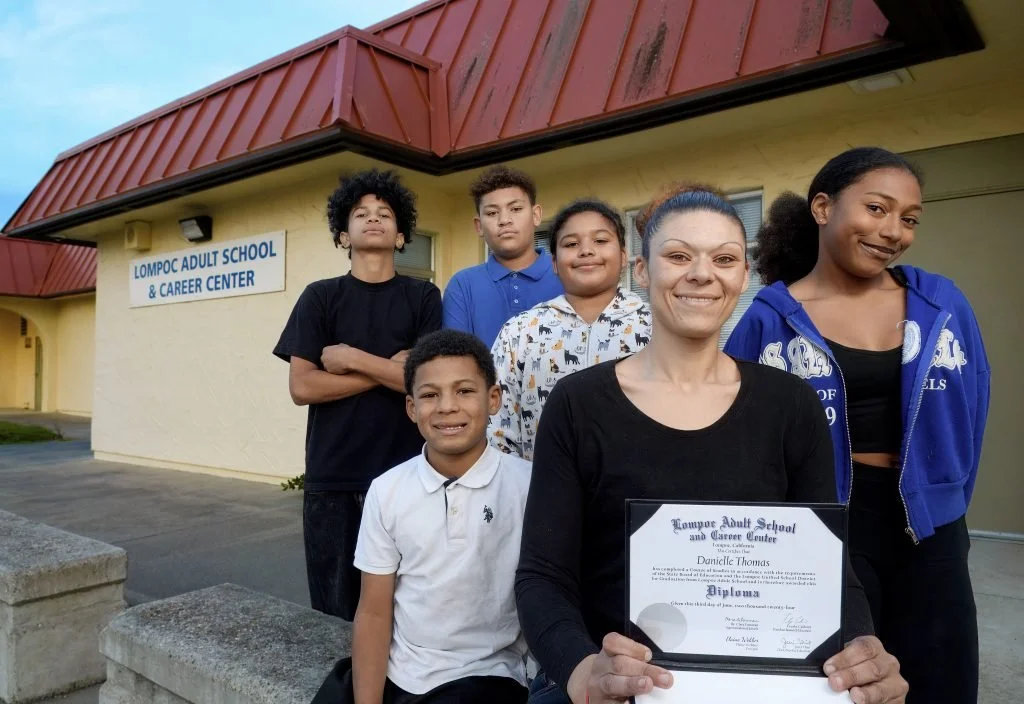
Danielle
When her 14-year-old son struggled to find motivation in his freshman year of high school, Danielle knew she could set a good example by earning her own high school diploma at the Lompoc Adult School and Career Center (LASCC). The school offers a free and flexible high school diploma program that can be completed entirely online. The program offers one-on-one support, career and job search and college transition assistance.
The oldest of Danielle’s three children started high school in 2023, and struggled to find the motivation to graduate and complete his education. “I wanted to actively show my son instead of just telling him, this is why he needs to go,” Danielle says. “I wanted to show him that if I can do it, he can do it.”
In addition to setting an example for her three kids, Danielle knew a diploma was necessary to further her life and career. Now, Thomas is getting a head start on setting the next example for her kids as a college student. In September, Danielle began her first semester at Grand Canyon University, where she is studying behavioral science with an emphasis on adolescence and childhood. “I can be an active example daily of showing them that Mommy does it too,” Danielle says.
Written by Chris Woodard. Photo by Len Wood. To learn more about the Lompoc Adult School and Career Center, visit High School Student Success Story
The above story was generously shared by Lompoc Adult School and Career Center.
A Santa Barbara County Family’s Story
One local family describes their journey as both deeply hopeful and profoundly challenging. They are a growing household living in a small home they have long outgrown. Children share bedrooms with no privacy, and every square foot is stretched to its limit. The parents have searched for a larger home for years, yet even fixer-uppers requiring substantial repairs are priced far beyond what their budget allows. The down payments alone feel impossible to reach. When financing is available, the interest rates make monthly payments unrealistic for a family already stretched thin.
They earn slightly above the threshold for medical assistance which places them in a painful gap. They do not qualify for support programs, yet they cannot comfortably afford the rising cost of family health insurance premiums that consume a significant portion of their income each month. Groceries, clothing, hygiene items, school supplies, transportation costs and utilities continue to climb in price, often outpacing any wage growth.
Their adult children also remain at home not by choice, but by necessity. Even with full time work, rent prices across the county are simply unattainable once utilities, groceries and fuel are factored in. Many rentals require high security deposits or income levels that are difficult to meet. As a result, the family’s small home has become multigenerational. Space becomes even more limited and parents feel the weight of supporting grown children while managing their own financial responsibilities.
The parents remain committed to working hard and creating stability for their children. They speak with gratitude for being together under one roof and for the opportunity to live in a community they love. At the same time, they feel stuck, unable to move forward because the cost of living rises faster than their income. Their greatest hope is simple: a little more space, a little more stability and a chance to breathe without fearing the next increase in premiums, rent, or groceries.
Their story is one of determination, love and resilience yet it underscores the systemic affordability challenges that many Santa Barbara County families face every day.
The above story was generously shared by Children’s Resource & Referral of Santa Barbara County.
We hope the experience of this family helps illuminate what it means to navigate these pressures in real time and why this dashboard matters for the families we serve.

Photo Credit: Campaign Creators
We want your feedback!
You are viewing a beta version of the Santa Barbara County Community Wellbeing Dashboard. Many focus areas are currently under construction and others will be developed in the near future. Regardless of where they are in their development, each of the focus area dashboards are engaging in cycles of continuous improvement.
You are our community. Help us make this better! Each user brings a unique perspective to the dashboard. We value your participation and invite you to provide feedback on your user experience.