
Food insecurity is disturbingly commonplace, despite Santa Barbara County’s agriculture abundance.
With 59,340 food-insecure residents and soaring food and living costs, Santa Barbara County requires innovative, data-driven, and equity-focused food solutions.
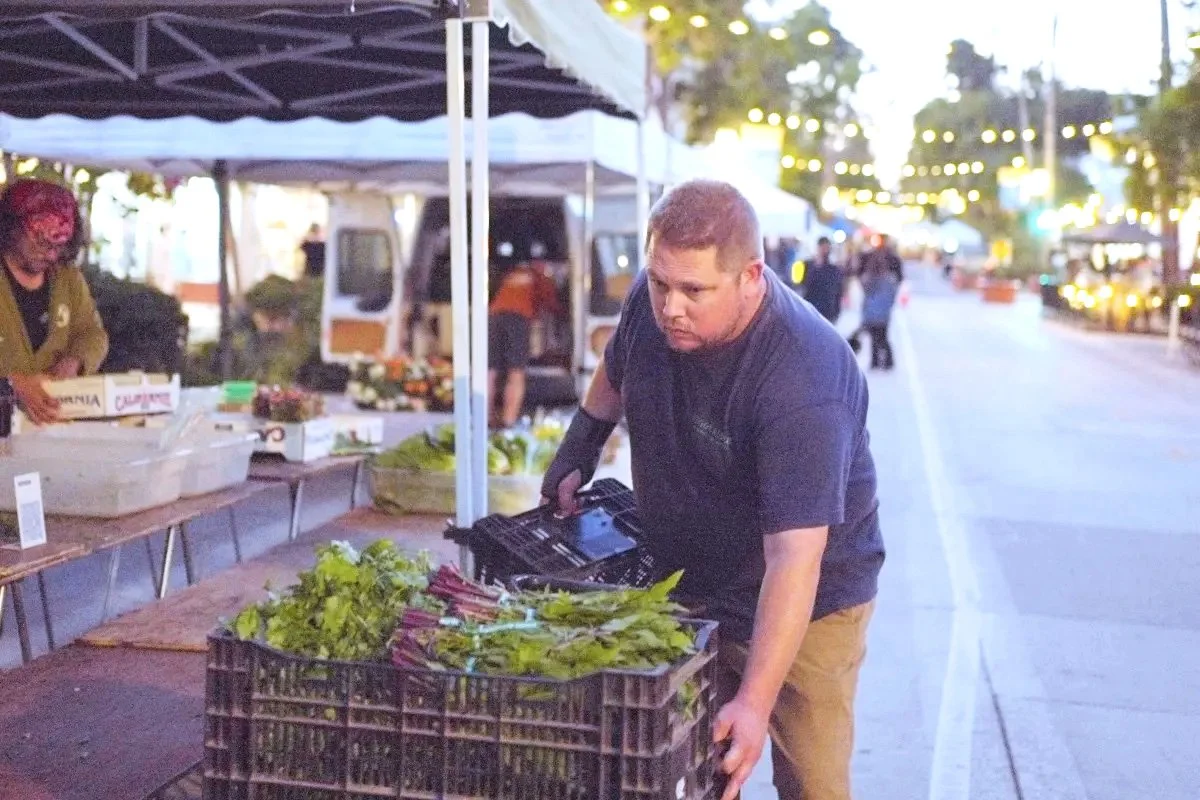
Kevin Kemp with Veggie Rescue at a farmers market. PC: Veggie Rescue
On this page:
The Food Security Dashboard is a project in partnership with the Santa Barbara Foundation, Natalie Orfalea Foundation, and the Schiele Family Foundation.

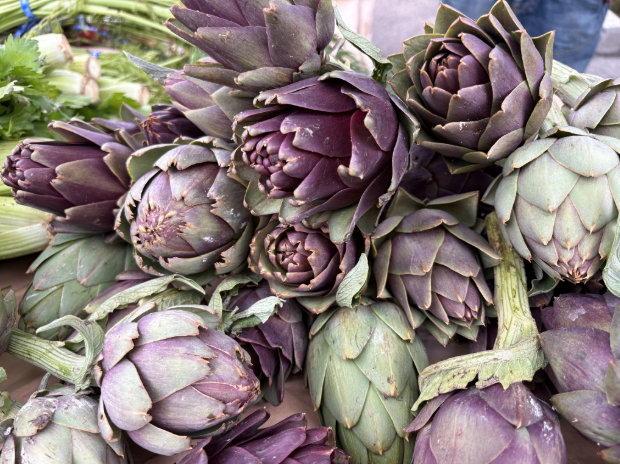
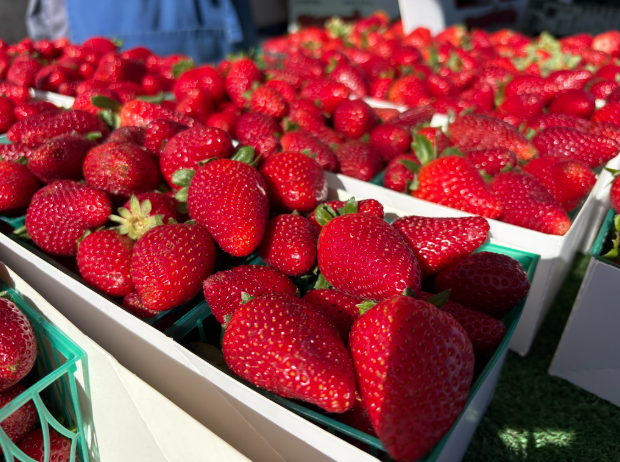
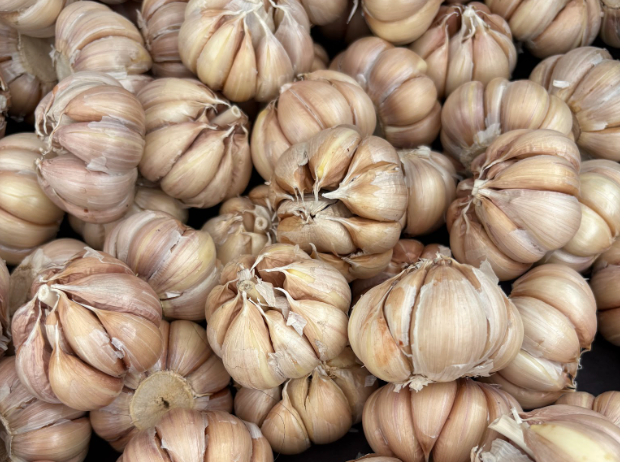
What is Food Insecurity? Not having enough food and being able to pay for food. This challenge is surprising because Santa Barbara County has a lot of food production and there is also a perception that the county is quite wealthy.
A Solution: Opening the door to data is critical to creating viable community solutions. The Food Security Dashboard is a data tool collaboratively created by community invested partners and supported by the funders named here. This shared data tool will help inform and guide future food solutions for Santa Barbara County.
Need Food?
Find a Farmer’s Market: SBCFAN, Ecology Center (EBT markets are included)
Interactive Food Security Data
Use the interactive charts below to explore food security data as it ties to food system, equity, education, and funding in Santa Barbara County, CA. Use the toggles to look at data and compare across metrics. All terms are defined in the Glossary. This data is most easily accessible in desktop format.

Interactive data sources: ACS, SBC Crop and Livestock Report, Food Bank of Santa Barbara, California Department of Education, California Department of Social Services, Cottage Population Health, Feeding America
Food System
Santa Barbara County produces adequate food from protein to produce year round to feed its community, yet up to 99% (David Cleveland, a professor of environmental studies at UC Santa Barbara) is shipped elsewhere. We aim to have a reliable, coordinated, accessible distribution system where local food sources are prioritized and food security needs are met.
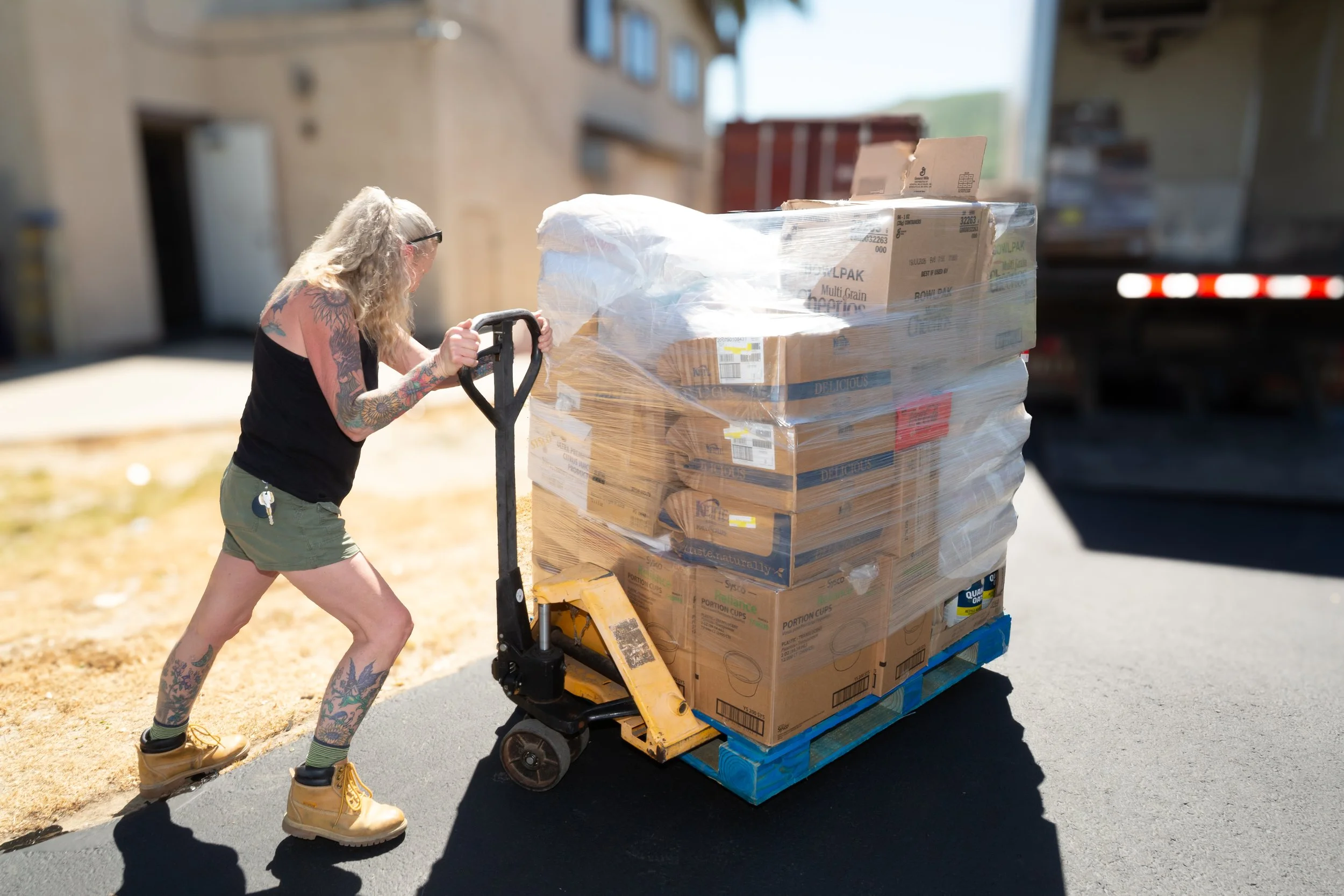
PC: Veggie Rescue
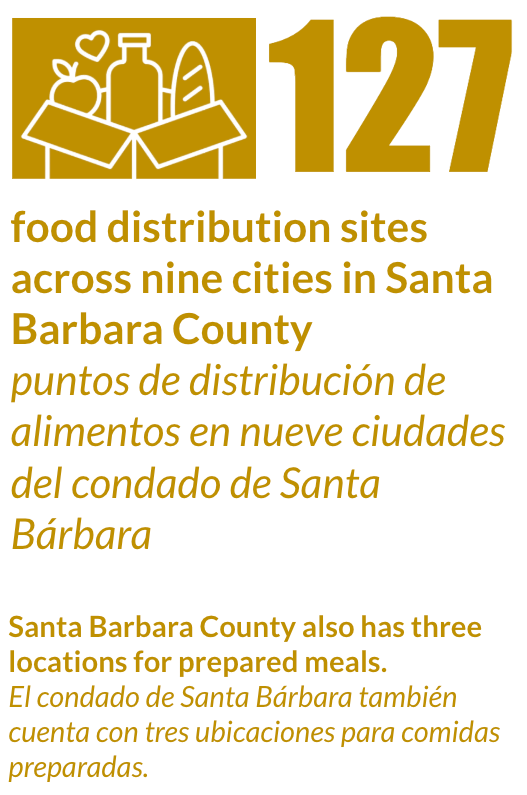
Data source: Food Bank Santa Barbara County
Food banks are just one element of the Food System — The broader system includes the producers, the distribution and pantries sites, the organizations delivering hot meals, the organizations delivering food bags, and the link between farms-farmers markets-CSAs-meals that shows the full landscape in Santa Barbara County.
All people have the right to access food. Please note, there has been no ICE presence at food banks.
Food Sources Include:
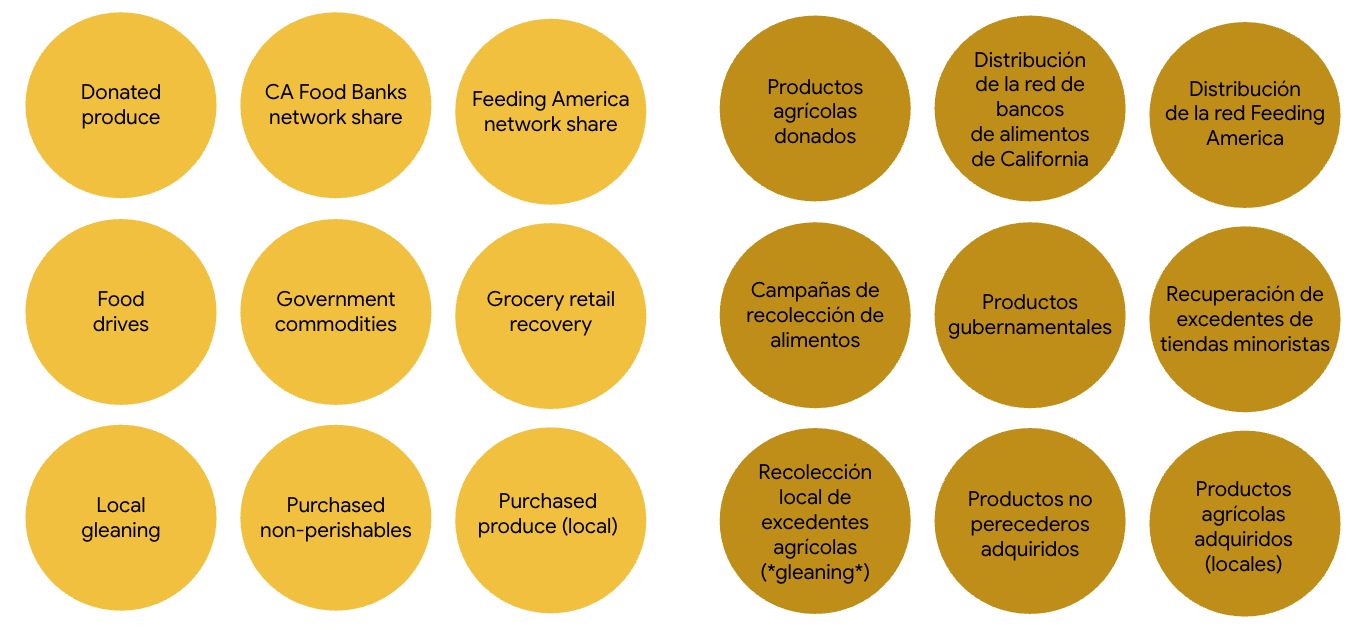
“Network share” notes:
Feeding America network share: nationwide donations are shared across the network, as needed
California Food Banks network share: donations across the state are offered when the local food bank can’t take them
Program Spotlights:
Apples to Zucchini Cooking School: At Apples to Zucchini, we’re dedicated to building community through cooking. As Santa Barbara County’s only nonprofit cooking school, we teach children, teens, and adults how to prepare delicious, nutritious, and affordable meals using seasonal, local ingredients. Join us in the kitchen today!
Food Bank Santa Barbara County’s mission is to transform hunger into health with fresh produce, nutritious groceries and nutrition education for all, from pre-schoolers to older adults, veterans to farmworkers.
Route One Farmer’s Market‘s mission is to increase access to local and sustainably grown food with a special focus placed on easing access to fresh and healthy local foods and bridging barriers that hinder our low-income community from shopping at farmers markets.
Veggie Rescue‘s mission is to fight food insecurity by rescuing surplus produce and delivering it, free of charge, to nonprofits, schools, and community programs serving people in need. With over 700,000 pounds of food rescued each year, Veggie Rescue is keeping good food in circulation, reducing greenhouse gases, and nourishing thousands across Santa Barbara County.
“Veggie Rescue's deliveries of fresh vegetables and other foods help us serve local families and our homeless community. When I receive a text from Veggie Rescue, everyone gets excited—because they know fresh produce is on the way. Thanks to Veggie Rescue, our food giveaway line has grown, and we are able to offer healthy vegetables to more people.”
— Veggie Rescue PartnerFood Access & Education
Food Access
While there has been progress, food access remains incredibly challenging for Santa Barbara County residents. Calfresh data tells us that monthly participation has remained around 35,000 for the past 18 months, though budget cuts could mean an impact to over 17,000 households. Santa Barbara County has strong support services for the food insecure community including efforts towards readily accessible food.
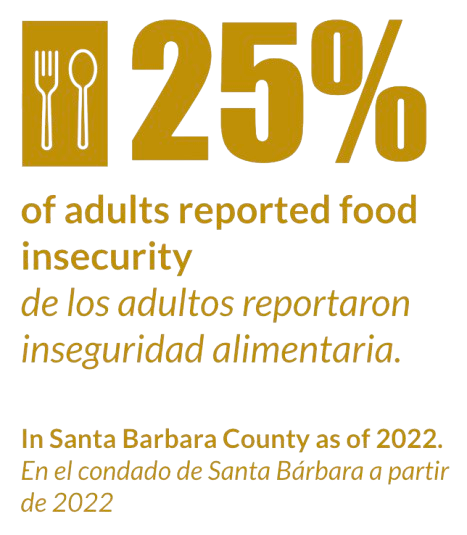
Data source: 2023 Health Indicator: Food Security Profile
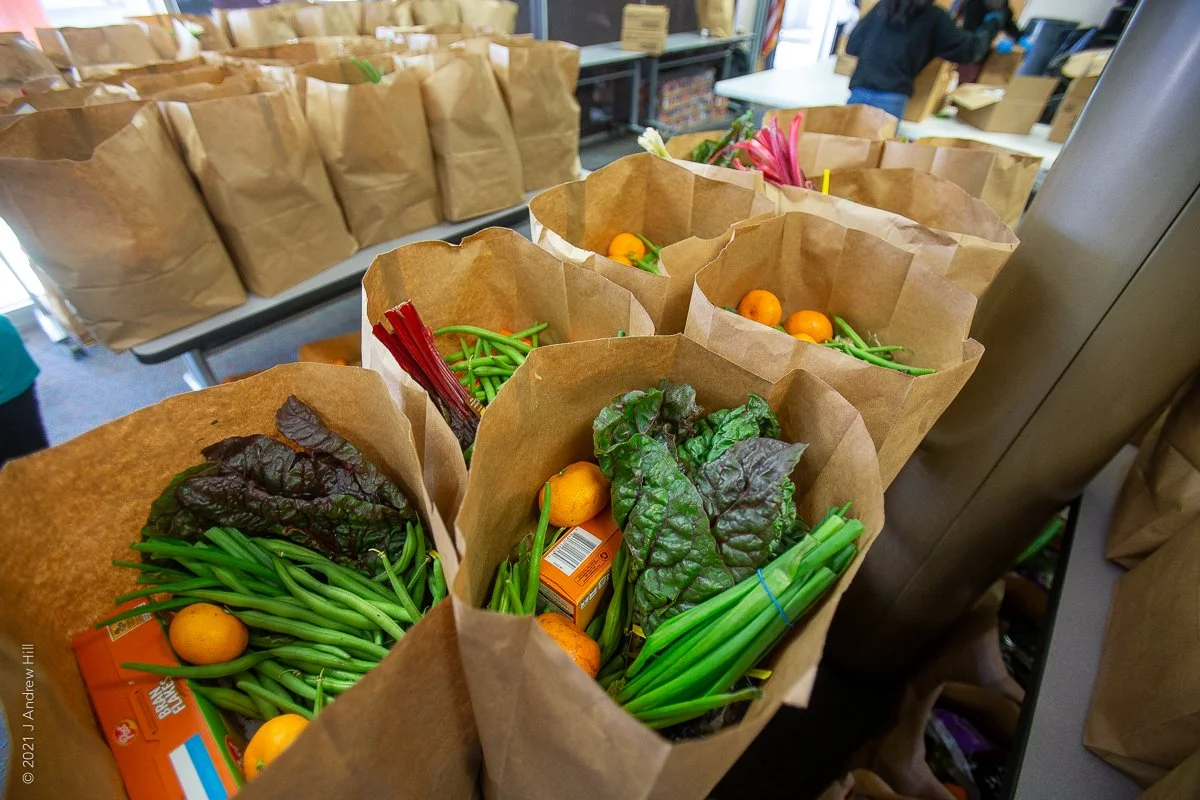
PC: J Andrew Hill
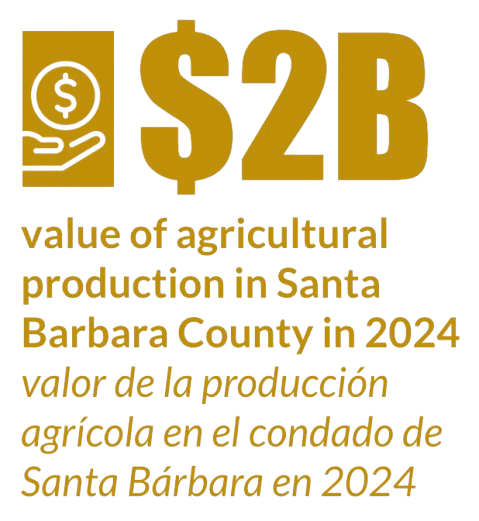
Data source: 2024 Santa Barbara County Crop and Livestock Report
Program Spotlight:
Meals on Wheels Santa Barbara Since 1971, Meals on Wheels Santa Barbara has helped homebound community members by delivering freshly prepared meals seven days a week, 365 days a year. In 2024, 330 clients were served with 45,000 meals delivered.
Education
Access to food knowledge and skills is one of the ways Santa Barbara can improve food security across the county. Whether through school gardens, partnerships with restaurants or farms, or sustainable farmers markets, food education is a valuable component of security.
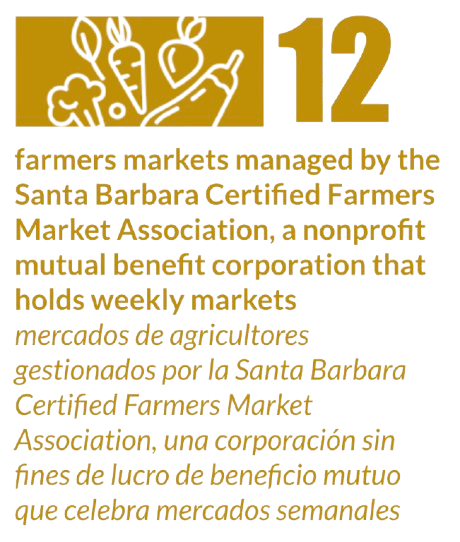
Data source: Edible Santa Barbara
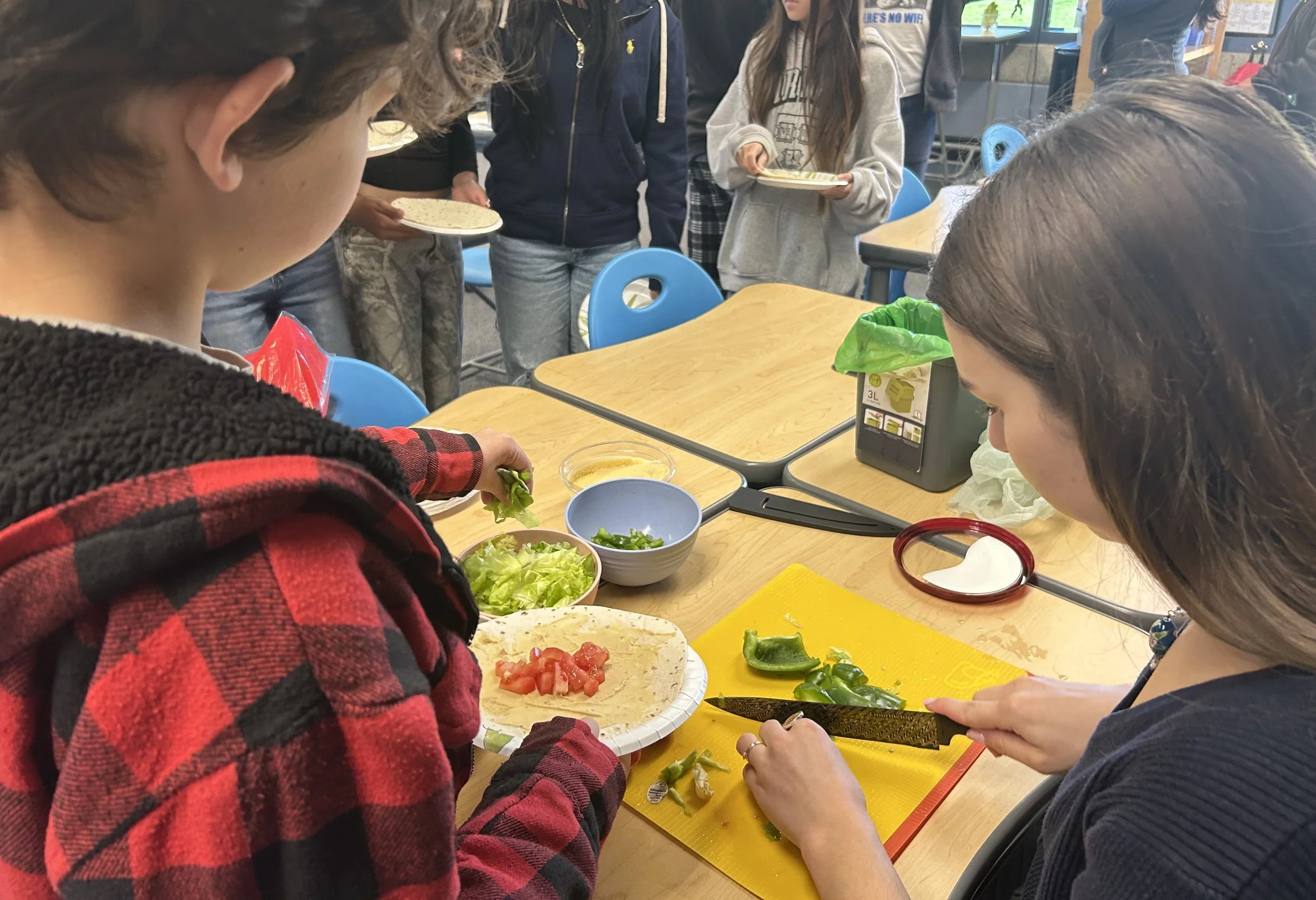
PC: Kids in Nutrition
In Santa Barbara County, there are many resources and services available, but at times community members are unsure where to find information and access to food knowledge and skills. The following highlights several of those programs offering supports to our community.
Program Spotlights:
School Gardens Program The Explore Ecology School Gardens Program connects children to nature and teaches them how to grow their own organic food using the garden as an outdoor classroom. Currently serving 14,281 students per year in 30 local schools and 7 districts in Santa Barbara County.
Kids in Nutrition Founded in 2014 by two undergrads at UC Santa Barbara, Kids In Nutrition (KIN) is a student-led movement that aims to prevent chronic disease before it starts and inspire habits that support a more sustainable, climate-resilient food system.
The California Women’s Infant and Children (WIC) program is a federally funded program that helps families across the county by providing nutrition education, breastfeeding support, healthy foods and referrals to health care and other community
services.
WIC serves infants and children up to age 5 and people who are pregnant or have given birth or experienced pregnancy loss. WIC on average provides education and food benefits to about half of infants born in Santa Barbara County and a quarter of those ages 1 to 5.
PC: J Andrew Hill
Food as Medicine
PC: J Andrew Hill
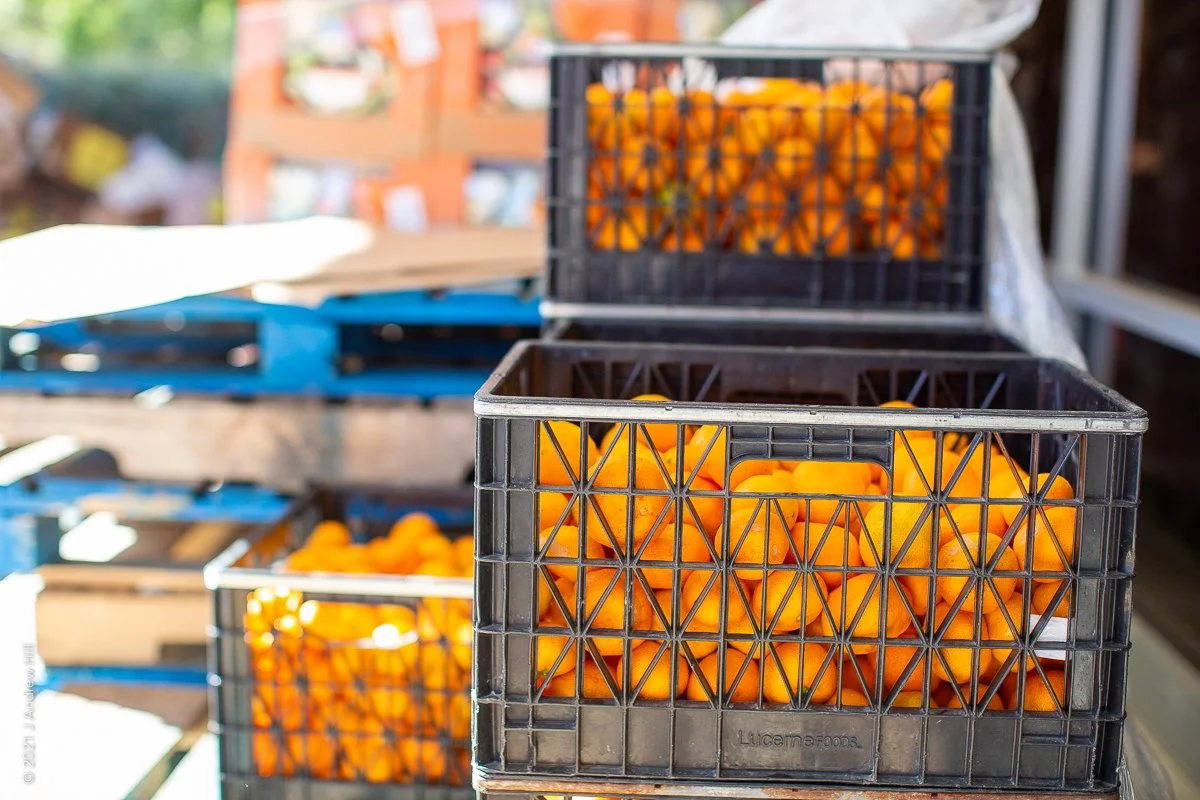
In Santa Barbara County, there is an important step that comes before prevention, and that is access to nutritious food. In Rooted’s recent article, The Future of Prevention is Partnership, it is clear that improving health requires more than medical care alone. It requires stronger partnerships between healthcare, nutrition, and trusted community organizations.
Food is Medicine and lifestyle medicine are critical as part of our community's healthcare infrastructure. These approaches play essential roles in both prevention and treatment, yet access to them is rarely tracked, and resources in Santa Barbara County are limited. Indicators such as access to culturally relevant nutrition education, lifestyle medicine-trained healthcare providers, medically tailored meals, produce prescription programs, and other Food is Medicine services will help identify important gaps and opportunities while recognizing nutrition and lifestyle support as essential components of community health.
Program Spotlights:
Organic Soup Kitchen Since 2009, Organic Soup Kitchen has delivered medically tailored meals at low cost to people whose conditions demand real nourishment. Nearly all of our clients live with cancer, chronic illness, or disability — and most are also facing financial hardship. None of them should have to choose between treatment and nutrition.
Rooted Santa Barbara County is a community-powered nonprofit transforming health through fiber-forward nutrition and lifestyle-based approaches to preventing and improving chronic disease. focus on neighbors facing the greatest barriers to good health and the direct service teams that support them, equipping our community with the tools, skills, and encouragement to eat well, feel better, and live longer, healthier lives.
Community Experience:
Community members from across Santa Barbara County share their stories tied to food systems and access below.
PC: Route One Farmer’s Market
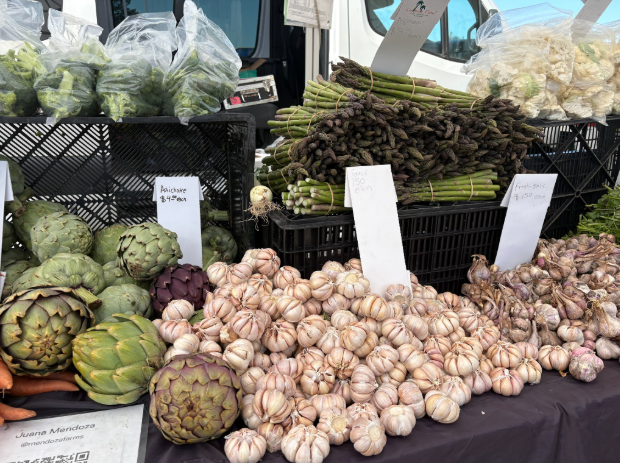
Farms Together Program Impacts
Shared by Shelby Wild, Route One Farmer’s Market
LFPA is the Local Food Purchase Assistance Program. In California, it is also known as the Farms Together program.
LFPA is funded by the United States Department of Agriculture(USDA). In 2025, the USDA cancelled the program. Projects are terminating by the end of 2026, and contracts are already being cancelled. This cancellation represents a loss of $80 million into rural California economies. This program purchases food from small family farms and provides it to food-insecure families. CAFF, Fresh Approach, and CAFB are partners that help connect farmers and local food hubs with food banks.
LFPA has directed approximately $7.3 million into Senate District 21, supporting a total of 65 farms. On average, participating farms in the district received about $62,000 through the program.
For Route One specifically, LFPA supported approximately 14 farms and generated roughly $590,000 in purchases from local producers
To learn more:
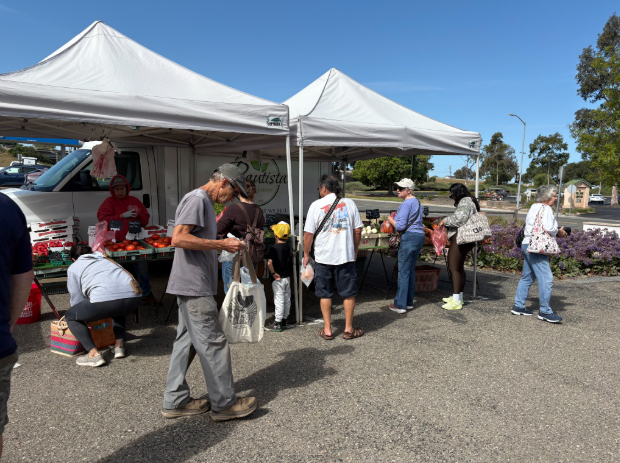
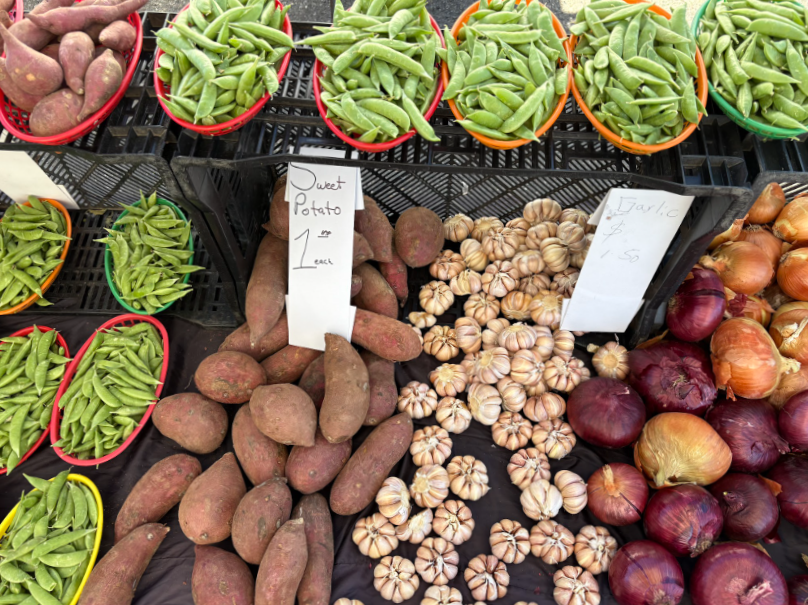
PC, both photos: Route One Farmer’s Market
Julia
For many years, Julia (name has been changed to protect identity) struggled with digestive issues. After moving to the United States, adjusting to the food was especially difficult for her because Julia grew up eating clean, fresh food. She was never exposed to heavily processed, frozen, or chemically preserved foods, and eating those kinds of foods made her digestive system very uncomfortable.
For a long time, Julia struggled to find something she could eat comfortably until she discovered the soups at Organic Soup Kitchen. Their support over the years has meant so much to Julia, and she will always be thankful.
Recently, Julia decided to start transitioning back to eating more regular foods. At this point, she mostly uses the soup when her stomach is upset, and she feels ready to begin introducing more solid dinners into her routine. Organic Soup Kitchen truly made a difference in my life."
The above story was generously shared by Organic Soup Kitchen.
Community Members Making a Difference
There are many organizations and community members doing this important work in our community (see Partner Page). Below are the stories of three community members who are engaged in food security work across Santa Barbara County.
-

Frederic ("Fred") Kass, MD, JD, MPA
Former Assistant Clinical Professor, UCLA Health (retired July 2026)
“There is no public health intervention more important than improving community nutrition. Our highest priorities must be reducing food insecurity and providing effective nutrition education that empowers families to make healthier dietary choices. Together, these efforts address the root causes of many chronic diseases and promote health across every stage of life.
Few public health initiatives have the potential to produce such broad and lasting benefits. Improving nutrition not only enhances individual well-being but also strengthens families, reduces healthcare costs, and improves the overall health and resilience of the community. No other intervention offers a greater opportunity to improve population health on such a wide scale.”
-
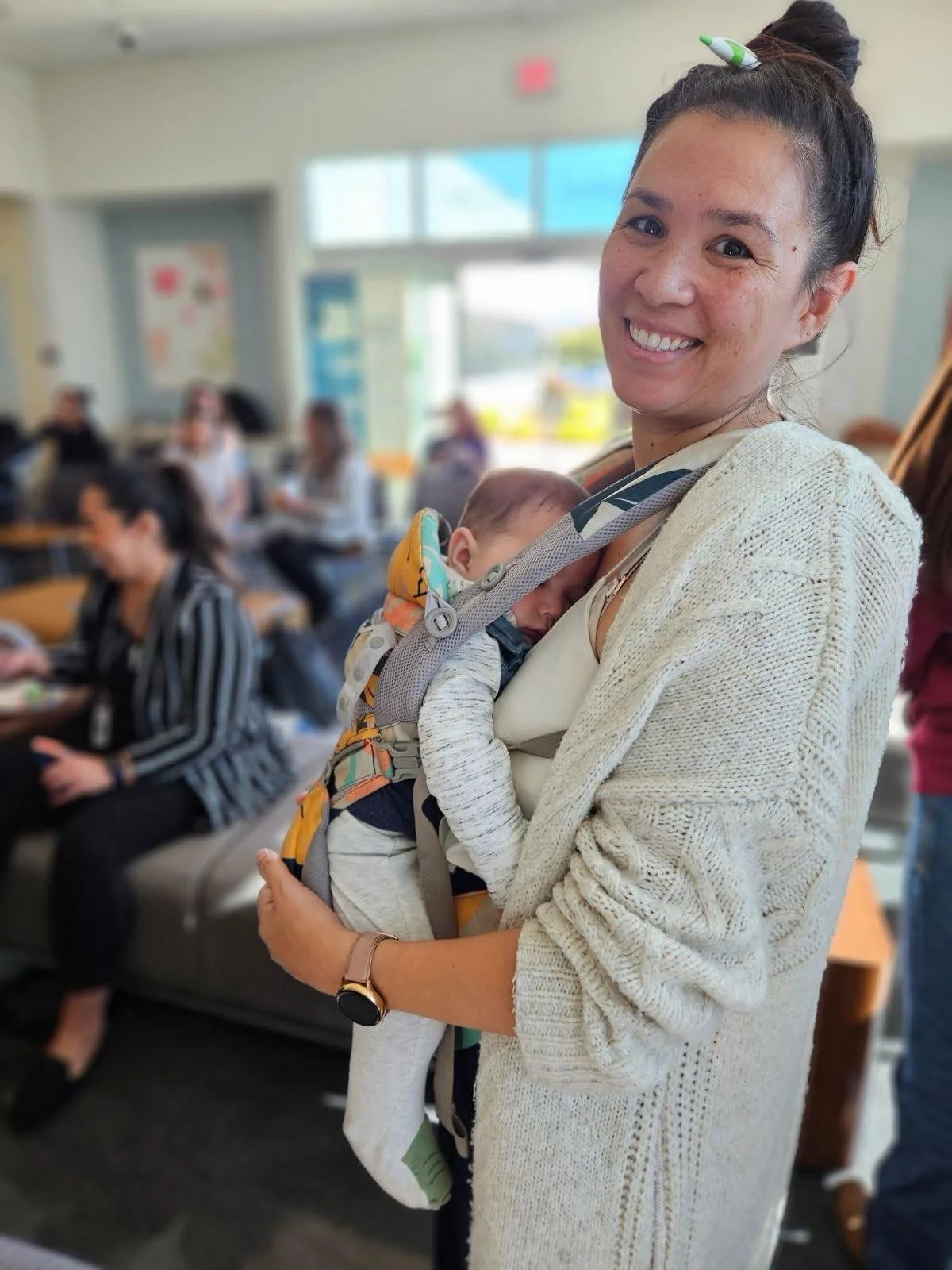
Susan Liles, MS RD CLEC
Director of Nutrition Services/WIC, Santa Barbara County Health Department
“Food insecurity affects everyone in some way and ultimately the overall wellness of the county. Food insecurity is a public health issue, and when we see that we all have a role in building a fair and healthy food system, we become more committed to working together and supporting our community.
Every individual contributes to and is affected by the local food system. This connection comes from our local farms, the choices we make when we shop, and the community programs that help make sure everyone has enough to eat.
Addressing food insecurity and chronic disease through nutrition education also starts before birth. Reinforcing prenatal care, breastfeeding, and healthy habits through childhood and into adulthood builds a healthy community. It also requires more than just clinical care; it depends on strong partnerships across our county. We are fortunate to live in a county where community organizations, County departments, elected officials, and community members work together to create a healthier, more resilient future for everyone.”
-
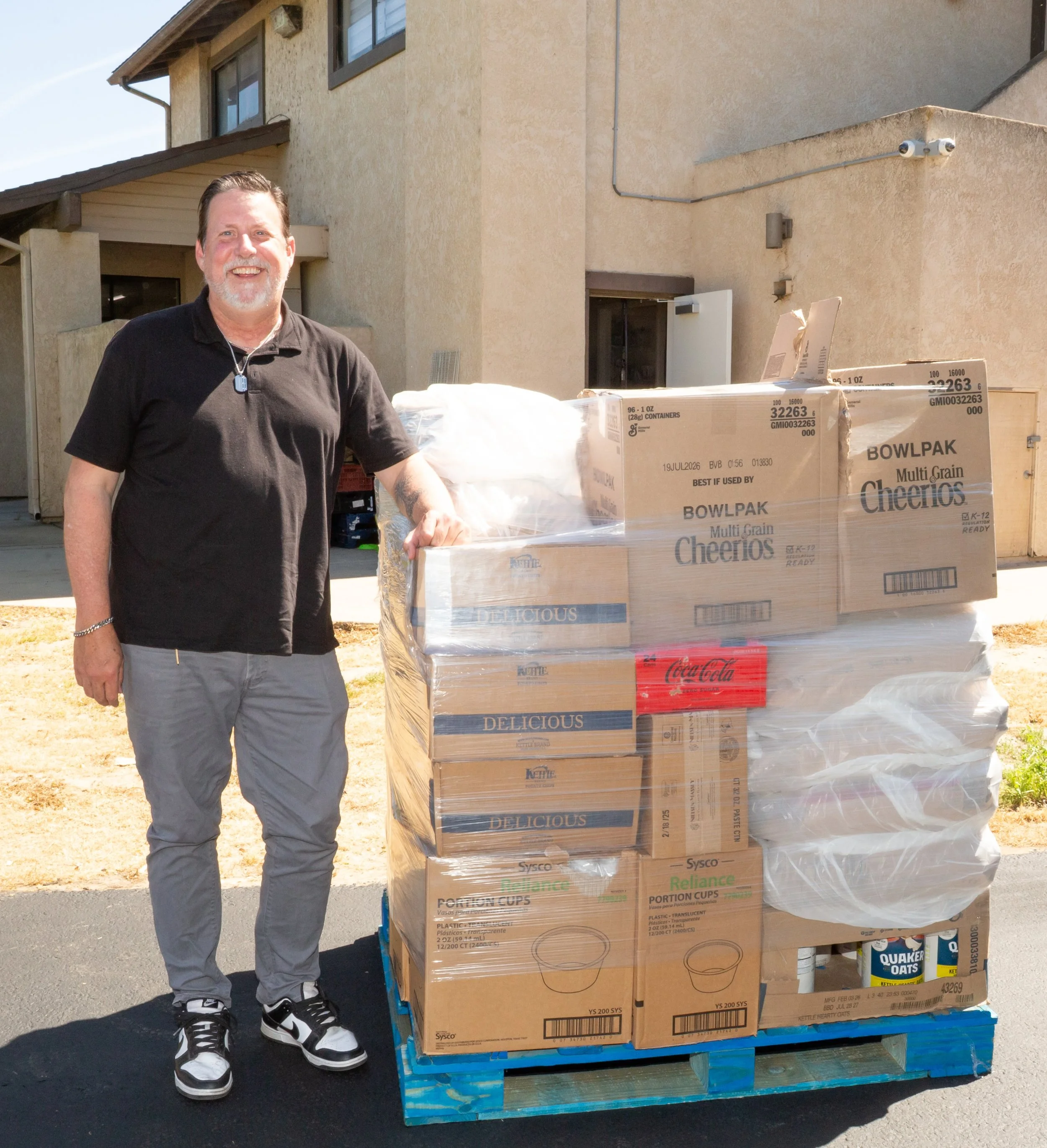
David Roberts
Program Director, Veggie Rescue
"Food insecurity in Santa Barbara County is quieter than most people expect, but it is widespread. At Veggie Rescue, I see it in the work every week: farms with more than they can sell, food businesses with more than they can use, and families across the county who need both. I love that we can connect abundance and surplus with real need to make a difference. In the 16 years, Veggie Rescue has been doing this work, the need has not shrunk, and neither has the community's response to it."
PC: Veronica Slavin
-
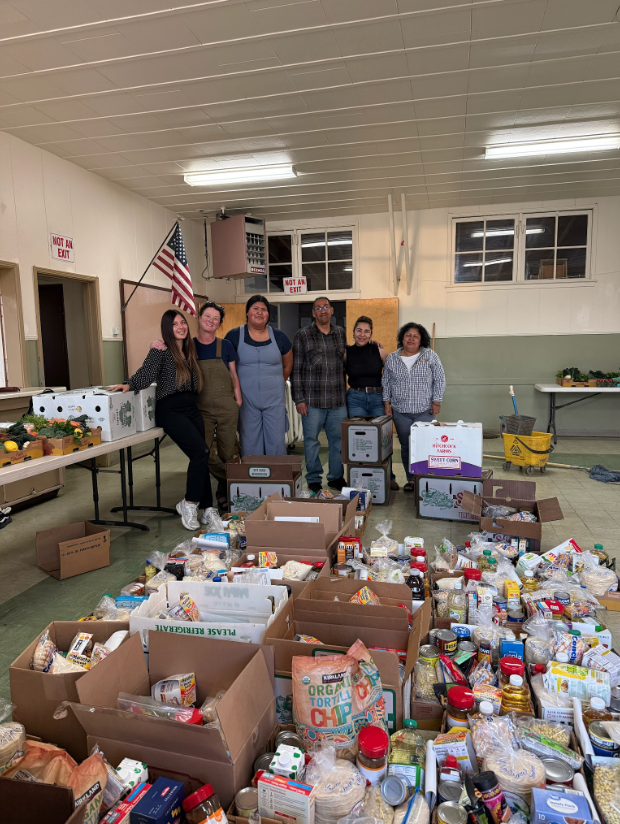
Shelby Wild
Executive Director, Route One Farmers Market
“At Route One Farmers Market, we believe that food security is a right for all. Our Santa Barbara County farms work incredibly hard to feed us and much of the world, growing enormous amounts of diverse and nutritious produce.
We believe that, with continued attention and investment, our local food system can meet the needs of our communities, begin to resolve food insecurity, and be responsive and resilient in times of crises.
Since opening in 2019, Route One has facilitated close to $2.5 million dollars in local food sales, supporting almost 20 local farms. With the support of Farms Together we have distributed well over 230,000 pounds of produce, or an estimated 192,000 meals.”
We want your feedback!
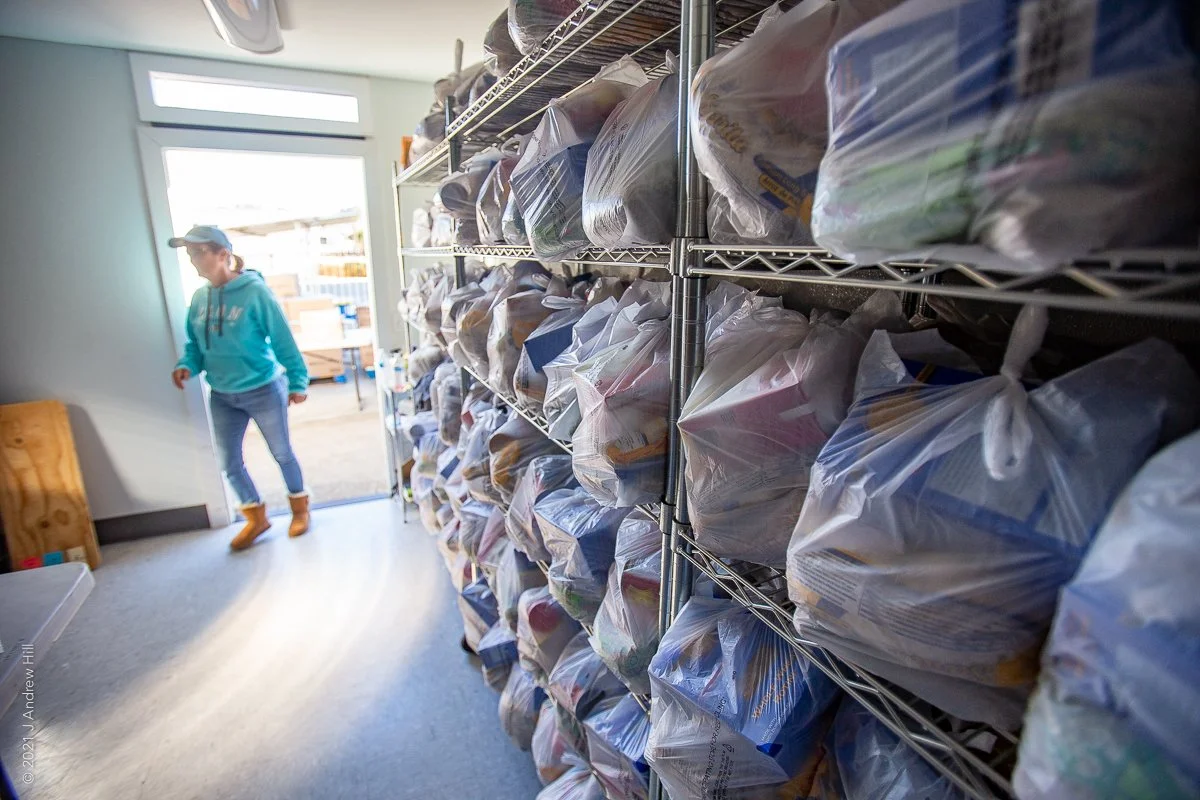
PC: J Andrew Hill
You are viewing a beta version of the Santa Barbara County Community Wellbeing Dashboard. Many focus areas are currently under construction and others will be developed in the near future. Regardless of where they are in their development, each of the focus area dashboards are engaging in cycles of continuous improvement.
You are our community. Help us make this better! Each user brings a unique perspective to the dashboard. We value your participation and invite you to provide feedback on your user experience.